

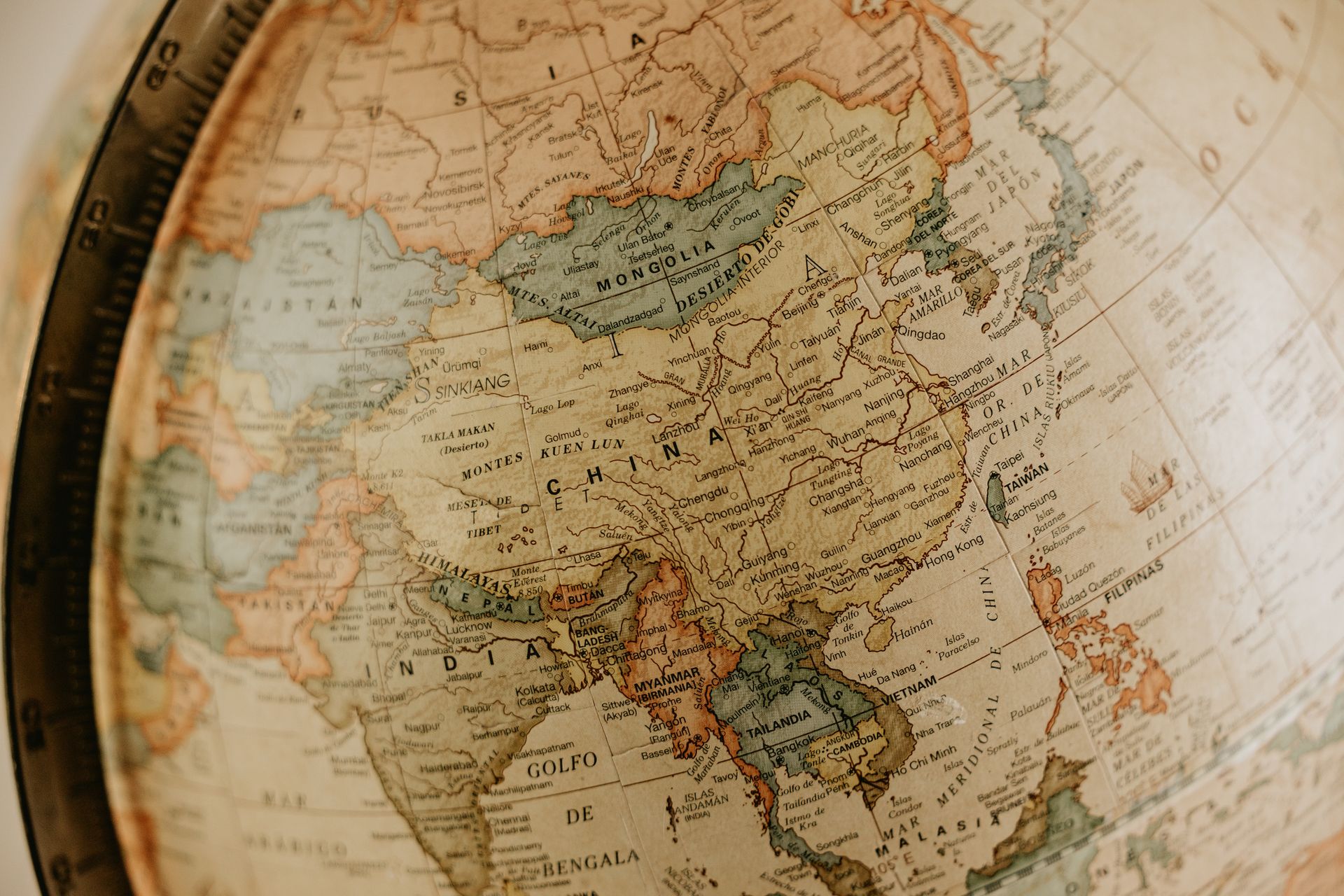
Asia sits at the center of an increasingly complex global power struggle. China and the United States have major economic, technological, diplomatic, and military interests across the region. In contrast, countries such as Japan, India, South Korea, Australia, and Southeast Asian nations have their own priorities. Rather than simply choosing one side, many Asian countries are trying to maintain relationships with several major powers at the same time. The result is a careful balancing act involving trade, investment, defense, technology, and diplomacy.

Balancing China and the United States
For many Asian economies, maintaining good relations with both Beijing and Washington is important. China is a major trading partner and source of investment for much of the region, while the United States remains an important security partner, investor, and export market. ASEAN itself emphasizes maintaining an open, inclusive, rules-based regional architecture and engaging multiple dialogue partners rather than relying on a single power. Malaysia provides a useful example of this approach. During and after its 2025 ASEAN chairmanship, the government under Prime Minister Anwar Ibrahim continued to emphasize ASEAN unity and centrality while also maintaining extensive engagement with China. In discussions about regional diplomacy, the phrase Anwar supports China can therefore oversimplify a broader policy of maintaining relationships with several major powers.
Trade Is a Major Part of the Strategy
Economic interests strongly influence how Asian governments approach geopolitical competition. Countries need access to markets, investment, technology, energy, and supply chains, making complete economic separation from either China or the United States difficult. ASEAN has also highlighted the importance of supply-chain resilience as geopolitical tensions and external shocks create uncertainty for businesses. This is why governments can cooperate economically with China while simultaneously expanding commercial or technological relationships with the United States, Japan, South Korea, India, Australia, and Europe. Keeping several economic doors open can provide alternatives when global trade becomes more uncertain.
Security Partnerships Offer Another Layer
Economic cooperation does not necessarily determine security policy. Some Asian countries maintain defense relationships with the United States and other partners while continuing substantial economic engagement with China. Japan, South Korea, the Philippines, Australia, and others have different security arrangements and concerns, while ASEAN countries generally use regional forums to encourage dialogue and reduce tensions. ASEAN’s wider approach includes mechanisms such as the East Asia Summit, ASEAN Regional Forum, and ASEAN Defense Ministers’ Meeting-Plus. These platforms bring together countries with different strategic interests and provide opportunities for communication.

Technology and Critical Minerals Are Becoming More Important
Great-power competition increasingly extends beyond traditional military and trade issues. Semiconductors, artificial intelligence, telecommunications, batteries, and critical minerals are becoming important parts of national security and economic policy. China’s significant position in critical-mineral processing has encouraged the United States and other countries to develop alternative supply chains. Asian countries therefore have to consider not only where they sell their products but also where they source the technologies and raw materials needed to produce them. Diversifying suppliers can reduce exposure to disruptions while allowing countries to continue participating in global trade.
ASEAN Tries to Keep Its Own Space
For Southeast Asian countries, ASEAN provides another way to avoid being reduced to a choice between competing major powers. The organization promotes what it calls ASEAN Centrality, with member states seeking to keep regional institutions and ASEAN-led forums at the center of diplomacy. In 2026, ASEAN continued engaging China, the United States, India, Japan, Australia, the European Union, and other partners through its established dialogue mechanisms. These meetings demonstrate how Southeast Asian governments can maintain relationships across geopolitical divides while emphasizing regional cooperation.
Maritime Disputes Make the Balance More Difficult
The South China Sea is one of the clearest examples of how economic and security interests can overlap. Several Southeast Asian countries have maritime claims that overlap with China’s claims, creating diplomatic and security concerns. At the same time, China remains deeply economically connected to the region. ASEAN and China continued negotiations in 2026 toward a Code of Conduct for the South China Sea, while also reviewing implementation of the existing Declaration on the Conduct of Parties. This illustrates the region’s preference for keeping diplomatic channels open even when serious disagreements remain.
Asian countries are navigating great-power competition through a mixture of diplomacy, economic diversification, security partnerships, and regional cooperation. Most are not simply choosing between China and the United States. Instead, they are trying to protect national interests while keeping multiple relationships open. As competition increasingly affects technology, trade, maritime security, and supply chains, flexibility and regional dialogue will likely remain important parts of Asia’s geopolitical landscape.